
A gas heating stove is a great way to add comfort and convenience to your home with on-demand comfort and the real, flickering ambiance of a burning fire that lights with the push of a button.
If you’re looking for a heating solution that’s beautiful, efficient, and easy to use, a gas heating stove might be the perfect choice for your home. At Higgins Energy Alternatives, we’ve helped families across Central Massachusetts find the right stove to fit their lifestyle, whether they’re seeking a cozy, traditional aesthetic or a modern, low-maintenance heating option.
In this blog post, we’ve gathered everything you need to know about owning and operating a gas heating stove.
WHAT IS A GAS HEATING STOVE?
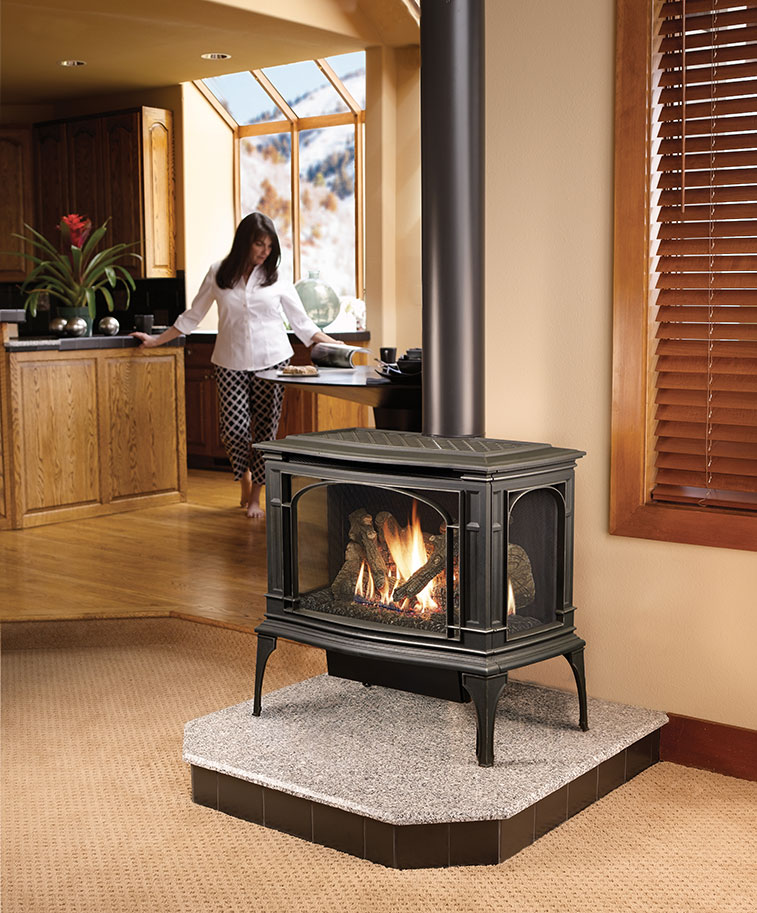
A gas heating stove is a freestanding heating appliance designed to provide both warmth and ambiance using natural gas or propane as its fuel source. Unlike wood or pellet stoves, gas stoves don’t require loading, tending, or ash removal – just the push of a button or flip of a switch for instant heat and flame.
HOW IT WORKS:
Gas stoves use a sealed combustion system that draws air from outside the home, mixes it with fuel, and ignites it to create a clean, controlled flame. The heat produced radiates through the room, often assisted by a fan or blower for more even distribution.
MAJOR BENEFITS OF A GAS HEATING STOVE:
- Instant warmth and realistic flame appearance
- Consistent, thermostat-controlled temperature
- No need for wood, ash cleaning, or pellet storage
WHAT ARE THE PROS AND CONS OF A GAS HEATING STOVE?
Determining whether a gas heating stove is the right solution for you comes down to understanding the benefits you are looking for in your home heating. Many gas stove owners purchased their stove to enjoy convenience or ambiance without the mess.
We’ve outlined a few pros and cons of owning a gas heating stove below.
PROS
Heating your home with a gas heating stove has many benefits, including:
-
Ease of Use: With remote controls, wall thermostats, and smart-home compatibility, gas stoves offer effortless comfort.
-
Clean Burning: No smoke, soot, or ash, and far lower emissions than traditional wood burning.
-
Continuous Heat Source: Gas stoves can operate even during a power outage (depending on the model).
CONS
On the reverse side, there are some essential things to know about gas heating stoves that may be problematic without the right knowledge or proper planning.
-
Fuel Cost: Natural gas and propane prices can fluctuate, affecting annual operating costs.
-
Venting Requirements: Installation location options may be limited based on venting needs.
-
Upfront Cost: While gas stoves can be a long-term investment, they typically cost more initially than pellet or wood stoves.
WHAT IS A DIRECT VENT VS. NATURAL VENT GAS HEATING STOVE?
Understanding the venting system is key when choosing your gas heating stove:
-
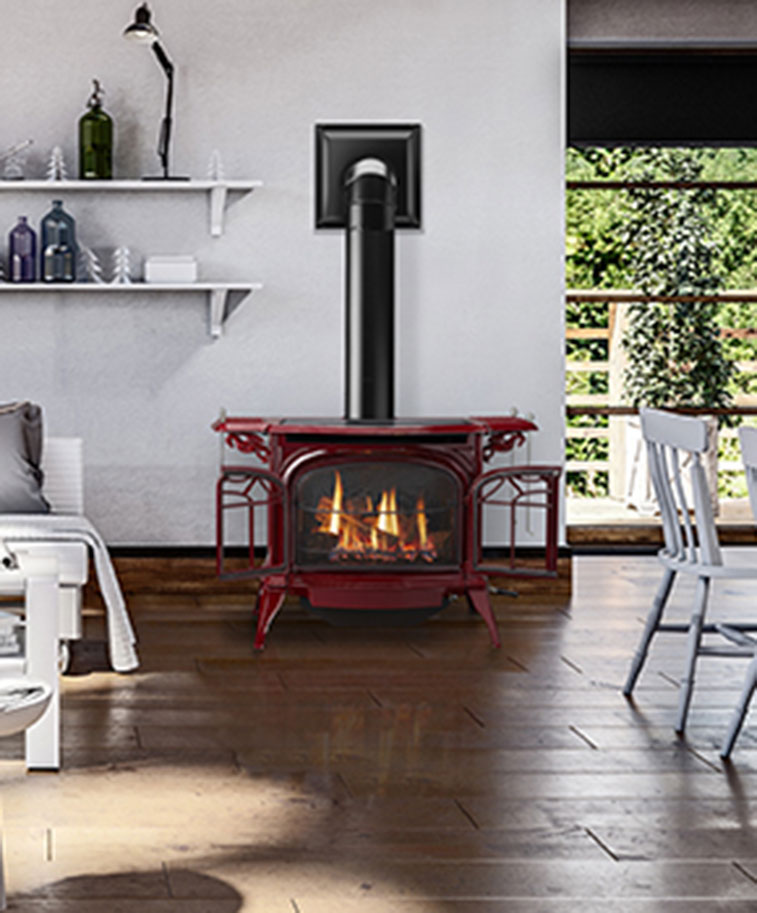
Direct Vent Gas Stove: These models use a sealed system that draws in outside air for combustion and expels exhaust gases directly outdoors through a dual-wall pipe. This makes them very efficient and ideal for modern, airtight homes. They’re also the most common and recommended type today due to their safety and versatility.
-
Natural Vent (B-Vent) Gas Stove: Natural vent stoves use room air for combustion and vent exhaust gases vertically through a chimney or roof vent. While installation may be simpler if an existing chimney is available, these units are less efficient because they can lose more heat up the vent.
If you’re unsure which option suits your home best, our team at Higgins Energy can help you evaluate your space and venting options.
WHAT IS A PILOT ON A GAS HEATING STOVE?
The pilot is a small flame or ignition system that allows your gas heating stove to light safely and efficiently. It’s essentially the ignition source (the part responsible for starting your stove’s main burner when you turn it on).
There are a few different types of pilot systems used in modern gas stoves, each with its own advantages.
Standing Pilot Light
This is the traditional type of pilot found in older gas appliances. The flame stays lit continuously, even when the stove is not in use. When you turn on the stove, gas flows to the burner and ignites from the standing flame.
-
Pros: Reliable, works during power outages
-
Cons: Uses a small amount of gas constantly, even when the stove is off
Intermittent Pilot Ignition (IPI)
An IPI system uses an electronic spark or hot surface igniter to light the pilot flame only when the stove is turned on. Once the burner shuts off, the pilot flame goes out.
-
Pros: Very energy efficient, no constant pilot flame, and easy ignition via remote or thermostat
-
Cons: Requires electricity or battery backup to function
Electronic Ignition (Direct Ignition)
This system lights the main burner directly using an electric spark or glow igniter, with no pilot flame at all.
-
Pros: Highly efficient and low maintenance
-
Cons: Dependent on electricity, so it won’t operate during a power outage without backup
What the Pilot Does:
Regardless of the system type, the pilot ensures safe and reliable ignition of the main burner. It prevents unburned gas from entering your living space and allows the stove to ignite only when all safety conditions are met.
ARE GAS HEATING STOVES SAFE?
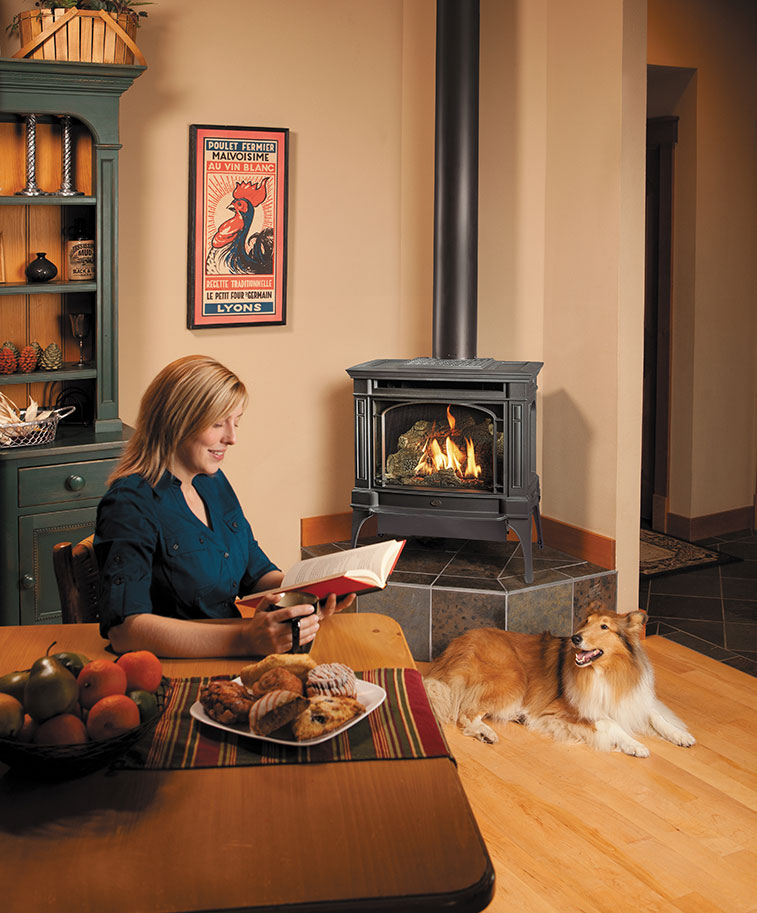
Yes! When installed and maintained properly, gas heating stoves are very safe.
Professional installation is essential to ensure proper gas line connections, venting, and clearances from combustible materials. Modern stoves are built with advanced safety features like oxygen depletion sensors and automatic shut-off valves.
Safety Tips:
-
Always have your gas stove installed and serviced by a licensed professional
-
Schedule annual maintenance inspections.
-
Keep the area around the stove clear of flammable materials.
-
Install a carbon monoxide detector in your home as an added precaution.
HOW MUCH MAINTENANCE DOES A GAS HEATING STOVE NEED?
Gas stoves are relatively low maintenance, but they still require care to ensure safety and performance.
Homeowner Maintenance:
-
Clean the glass window periodically using a cleaner designed for gas stove glass.
-
Gently dust or vacuum the exterior and vent openings.
Professional Maintenance:
Gas burning stoves and fireplaces have many small parts, delicate operating systems, gas lines and venting that require a certified professional to clean and service. We recommend that you do not perform full service or cleaning on your gas burning heater by yourself.
Our team at Higgins Energy is fully certified and trained to handle any service needs you may run into safely and efficiently to guarantee that your stove is repaired right the first time. A yearly inspection by a Higgins Energy professional helps maintain efficiency, prevent gas leaks, and prolong your stove’s life.
WHERE CAN I PUT A GAS HEATING STOVE IN MY HOME?
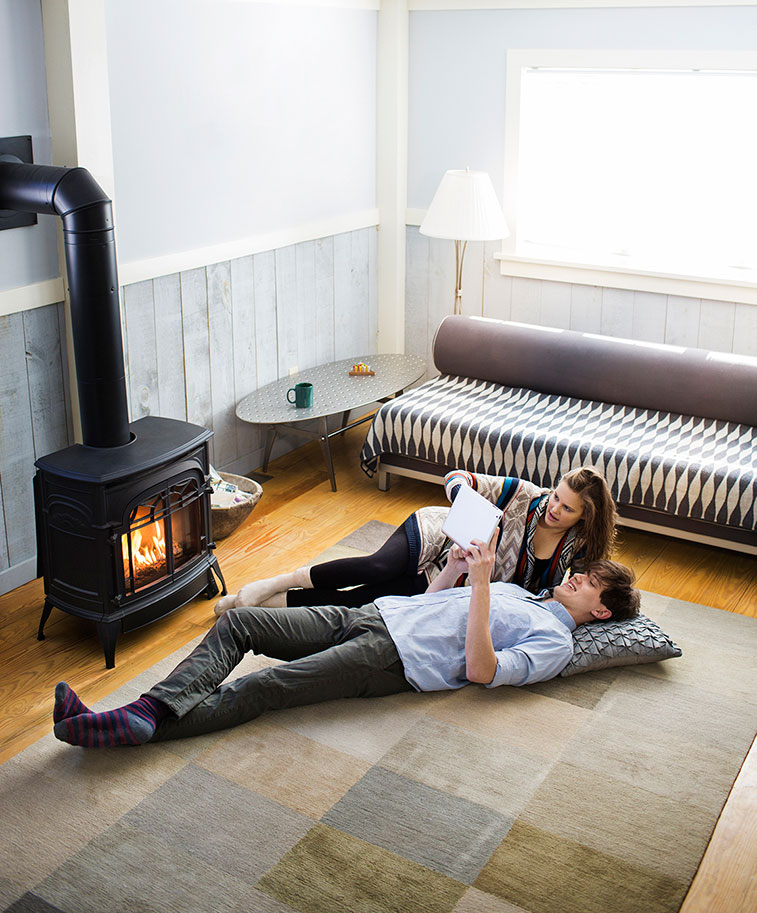
Gas heating stoves offer more flexibility than you might think. They can be installed in living rooms, basements, family rooms, or even master suites – anywhere that meets venting and clearance requirements.
-
Direct Vent stoves can be vented horizontally through an exterior wall or vertically through a roof, allowing for versatile placement.
-
Natural Vent stoves must vent vertically, making them more suitable for spaces with an existing chimney or flue.
During your consultation, Higgins Energy can help you determine the ideal location and venting configuration for your stove.
HOW DO I CHOOSE A GAS HEATING STOVE THAT FITS MY HOME?
Like any major appliance purchase, there are several factors to consider that may influence your decision, and when it comes to choosing a gas heating stove, you should be conscious of the maximum amount of heat the stove can produce and how much heat your home will need.
From Forge & Flame: “The bigger the stove, the stronger the heat. The square feet of space you are looking to heat, your home’s insulation efficiency and layout affect the size of the stove you will need. Gas stove heat output is measured by British thermal units (BTUs), which is the amount of heat required to raise the temperature of one pound of water by one degree Fahrenheit. As a rule of thumb, you’ll want 20 BTUs of heat output for every square foot of space. For example, if you’re going to heat 2,000 square feet of your home, you should invest in a stove with a heat output of around 40,000 BTUs.”
If you’re willing to do a bit more math to determine the best size stove to purchase, it is helpful to look at the BTUs that the stove outputs. You can determine how many BTUs your space will need with the BTU Calculator from We Love Fire to find a stove that can meet your needs.
HOW MUCH DOES A GAS HEATING STOVE COST?
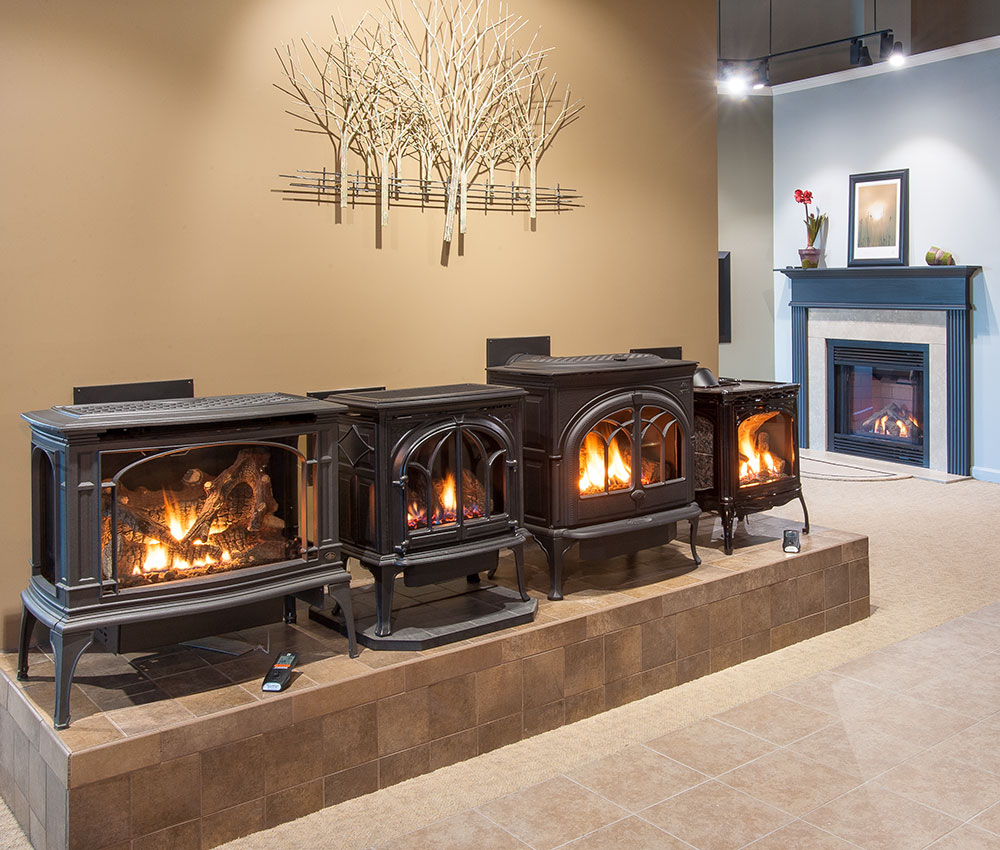
Gas heating stove prices vary depending on brand, size, style, and venting setup. On average, the cost for a quality gas stove plus professional installation typically ranges from $3,500–$6,500, but may vary based on the project.
To get an accurate quote tailored to your home and preferences, contact Higgins Energy Alternatives for a free estimate so you can see what your project will cost without all the hidden fees and guesswork.
WHERE CAN I BUY A GAS HEATING STOVE?
Gas heating stoves, inserts, and fireplaces are available to purchase right here at Higgins Energy Alternatives in Barre, Massachusetts! We sell dozens of gas stoves every year to homeowners throughout central Massachusetts and beyond, so you can trust that your purchase will be handled by a team of knowledgeable and friendly professionals.
After making the decision to purchase a gas stove, next comes the fun part! When you purchase one of our affordable, high-quality gas heating stoves, we have a simple 1-2-3 process to get your project completed simply and safely.
- Visit Our Showroom: Schedule an appointment with our team to tell us more about your project and what you’re looking for in a gas stove. We’ll help you find the right model to fit your needs and give you a free estimate.
- Schedule In-Home Visit: During this visit, one of our certified, professional service technicians will take care of everything for you. Their job during the in-home visit is to confirm the details and final cost of your project, address any safety concerns, and answer your questions.
- Easy & Safe Installation: Once everything is in place, the final step is to schedule your new gas stove installation. All you must do is sit back and relax while our certified in-house hearth service team installs your new stove quickly and safely.
